Material that can be worked
Adjoining shingles must lift without destructive cracking. The replacement has to fit the existing product and fastening pattern. A color difference is a separate appearance issue to discuss before a patch.
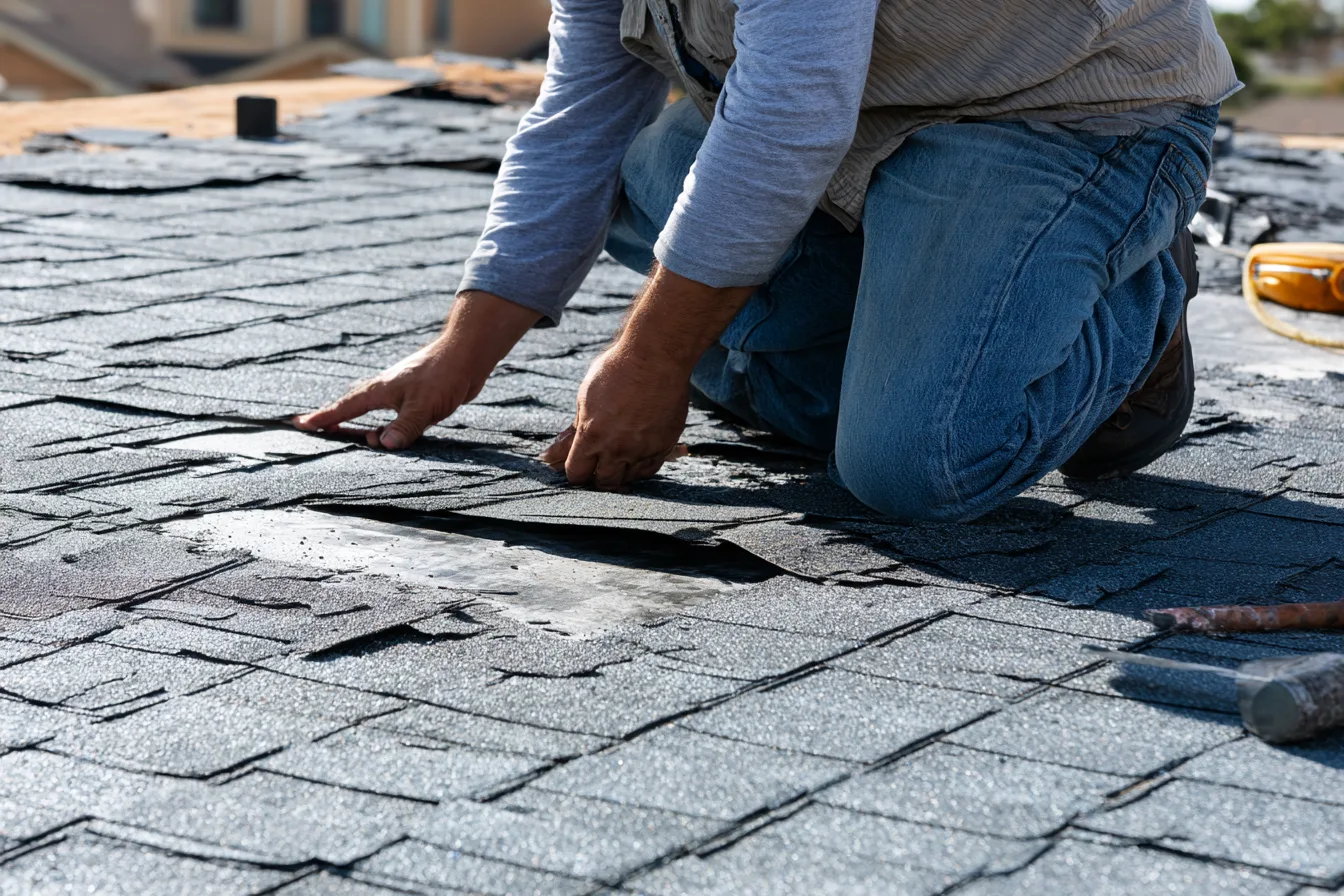
A leak is an opening to find and repair. We trace the water path, examine the roofing around it and explain how to make the repair connect to the roof that stays.
Free inspections with a roof walk when conditions allow.
Water can enter beside a vent, follow the deck and appear at a different point indoors. A ring on the ceiling identifies where it reached the room, rather than naming the failed part. We examine the shingles, flashing and penetrations along the likely path.
A cracked vent collar lets rain run beside the pipe. Flashing that has separated from a wall exposes the roof joint. Wind-lifted shingles can lose their seal or crease, leaving the covering vulnerable. Each cause calls for work at the opening and the surrounding water-shedding layers.
Request a free roof inspection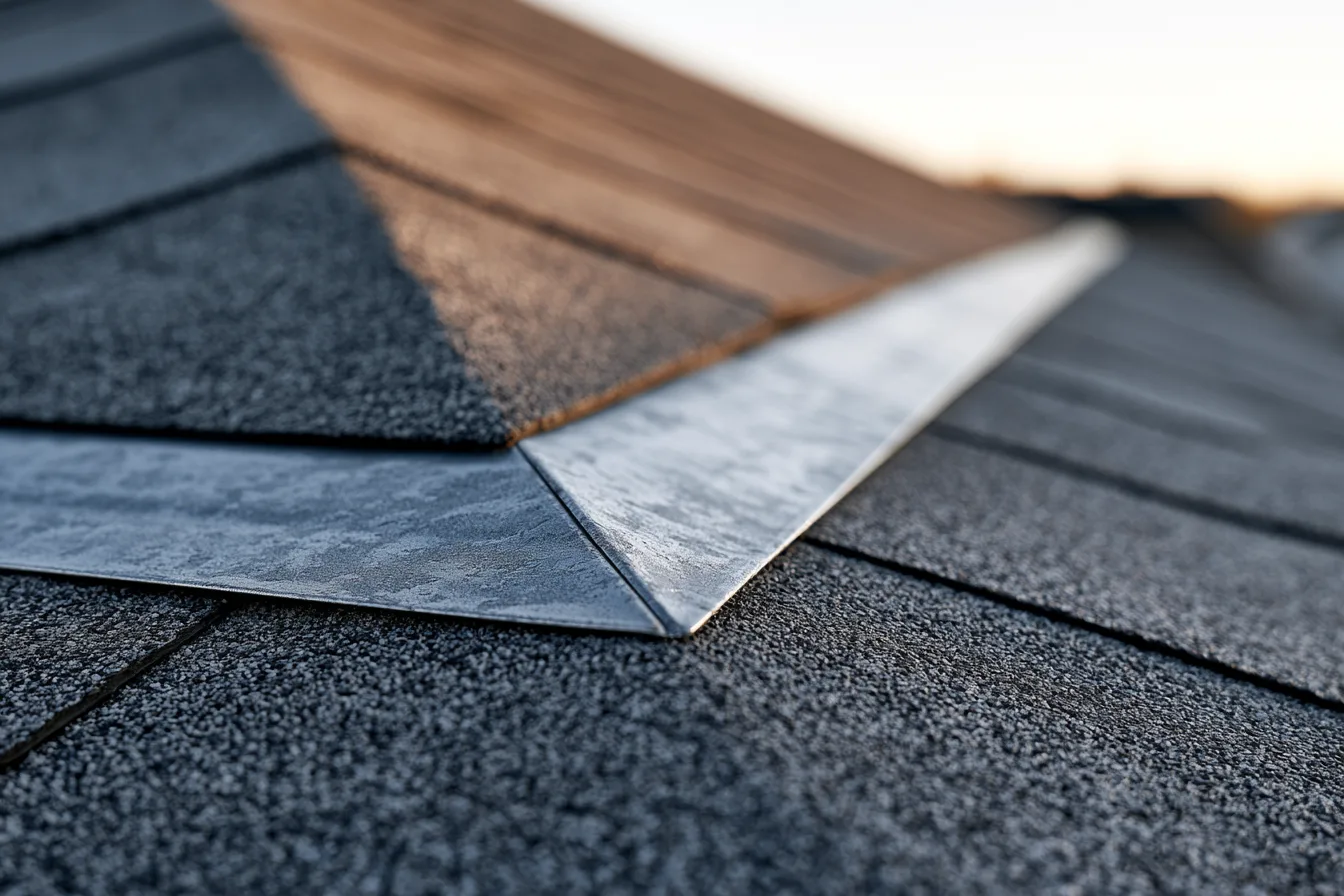
Adjoining shingles must lift without destructive cracking. The replacement has to fit the existing product and fastening pattern. A color difference is a separate appearance issue to discuss before a patch.
Decking and underlayment around the opening have to support the repair. Damaged wood can extend beyond the visible stain, so opening the area sometimes changes its size.
A patch cannot rely on surface sealant where a joint needs proper flashing. The repair must shed water back onto the roof, including the uphill and side connections.
We inspect the roof and open the affected area as needed to see the detail and underlying condition. The actual cause determines which materials are removed.
The work replaces damaged material, addresses affected decking when necessary and reconnects underlayment, flashing and covering in the correct order.
Nearby brittle shingles, failing penetrations or a larger damaged slope can widen the recommendation. When a repair grows, we explain replacement as an alternative.
Repair pricing follows the cause and repairable area. A roof-size replacement example is not a reliable way to price one leak.
| Scope change | Why it affects the repair |
|---|---|
| Access and roof geometry | Height, steepness, valleys and limited working room alter how the area is reached and protected. |
| Material compatibility | A matching profile and workable surrounding material matter to the repair connection. |
| Deck or underlayment damage | Roofing must be opened farther to reach sound layers. Interior finishes are a separate part of the project. |
| Flashing or trade work | A wall, chimney, gutter or rooftop equipment problem can require coordinated work beyond the covering. |
Yes, when suitable replacement material is available, the surrounding shingles can be worked and the repair can fasten to sound decking with dependable flashing. Wider damage or brittle material can change that answer.
Sealant has specific uses, but it does not replace a failed flashing arrangement or damaged roof layers. We identify the opening and use a repair compatible with that assembly.
No. One stain can come from a local failure. The source of the leak, surrounding roof condition and extent of underlying damage determine whether repair is practical.
Tell us the room, the drip or the roofing you noticed. You don't need to climb up to identify the cause.
(405) 358-4906